Food safety problems are rarely a single problem. Your solutions shouldn't be either.
I help food manufacturers, importers and brand owners understand what applies, fix what isn't working, and build food safety systems they can actually use.
Short first answers to the questions people ask most, each with a next step.
Short answer
That depends on what you produce, import or sell and how your business operates. Start with the activities involved, then work out what applies.
Next step
Importing food, and making or packaging food that goes to another province or abroad, generally need a licence. Selling only within your province generally doesn't. CFIA's licensing tool is the official check.
I also work with co-packers, distributors and food warehouses, packaging and design agencies, other consultancies, and incubators and food-business programs.
Not sure which service you need? You don't have to be.
Most people get in touch with a problem, not a service name. Describe what's happening and I'll tell you what I think applies.
I'm Thomas Kunjumon, a food safety and regulatory consultant with a scientific research background and experience inside food manufacturing and regulatory environments.
Karimont is my independent practice, so when you get in touch, you speak to the person who does the work. Alongside it, I'm pursuing doctoral research.
A single task with a clear end, often done in a day.
Charged by the hour.
For example
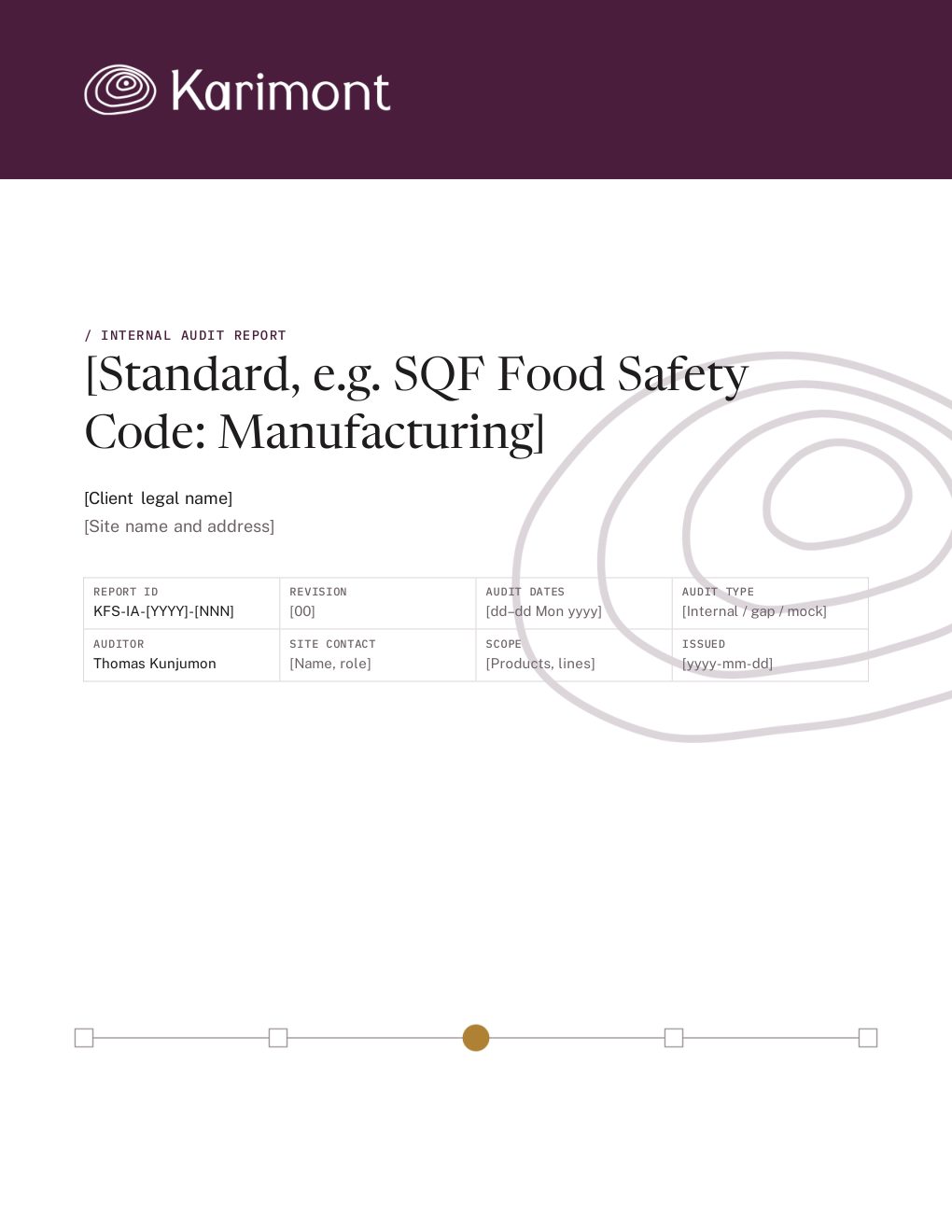
An internal audit
A licence question answered for your activities
One audit finding closed with evidence
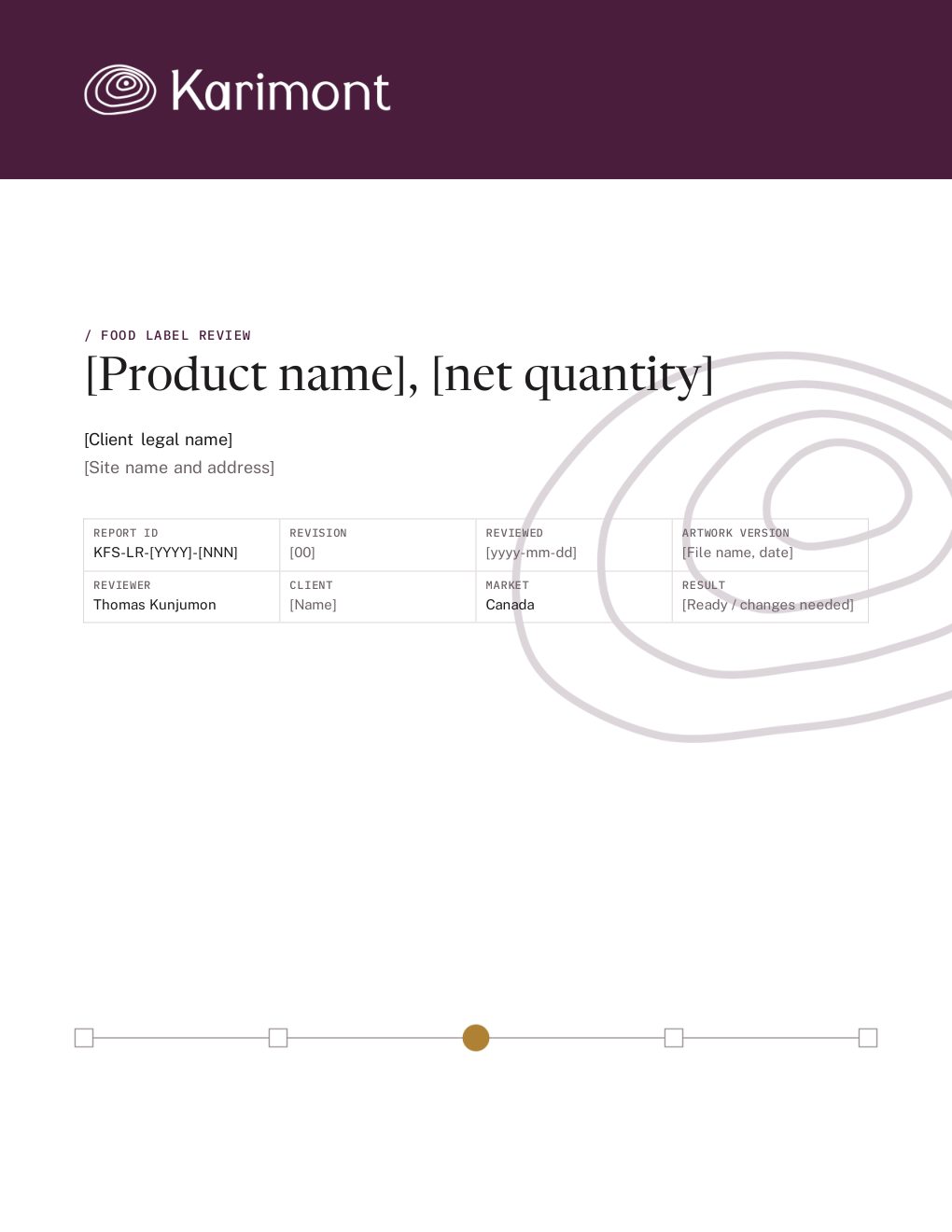
Internal audit report template, cover. Example layout.
A clearly scoped project
Defined deliverables and dates for a larger piece of work.
Charged by the project, priced on its complexity.
For example
A HACCP plan for a new line
An SQF, BRCGS or FSSC 22000 system build
A PCP for an SFCR licence
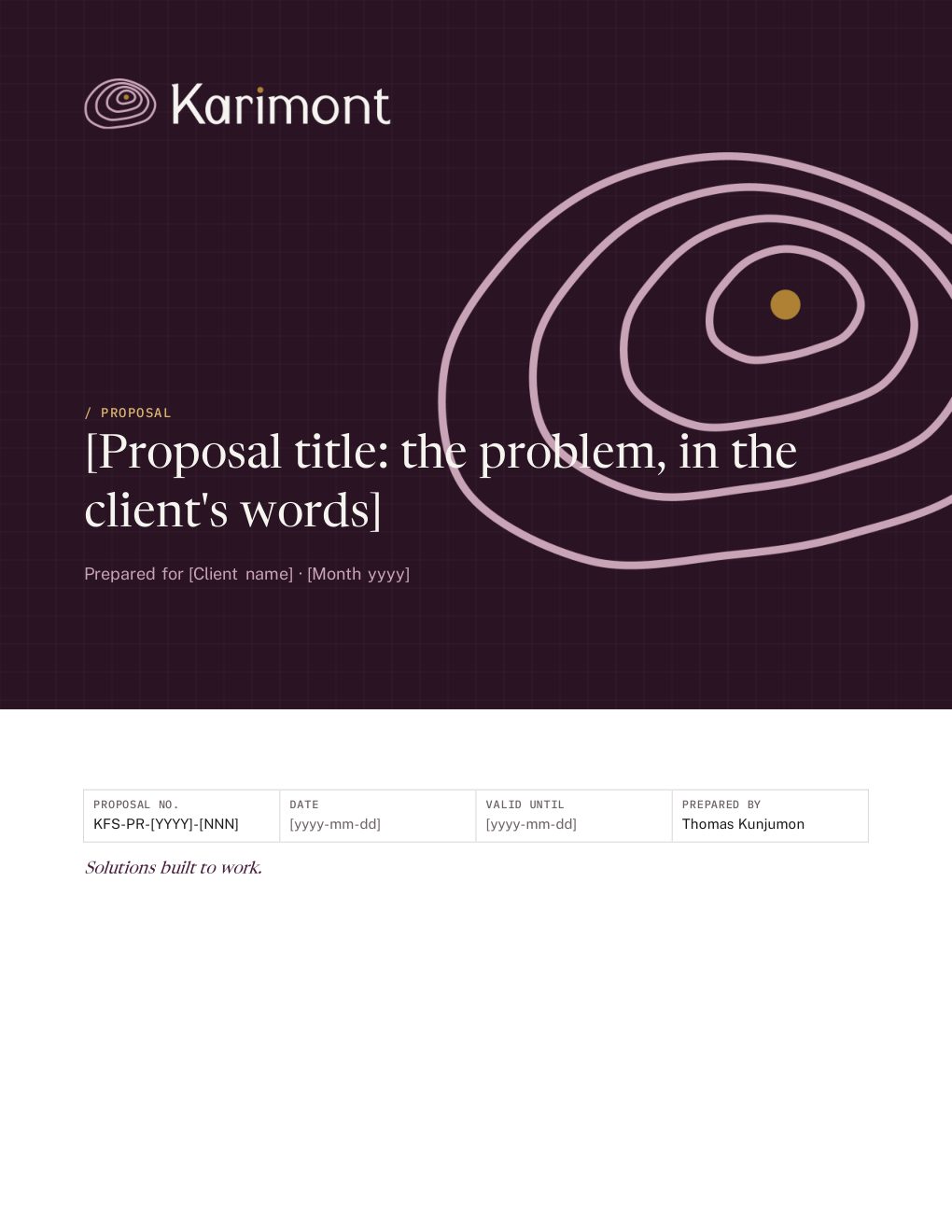
Proposal template, cover. Example layout.
Ongoing support
Recurring QA work through the year, each task reported in writing.
Charged as a monthly subscription, set by the number of site days you need.
For example
Scheduled internal audits
Supplier re-approvals and corrective action follow-up
Contract cover as your SQF practitioner or QA lead
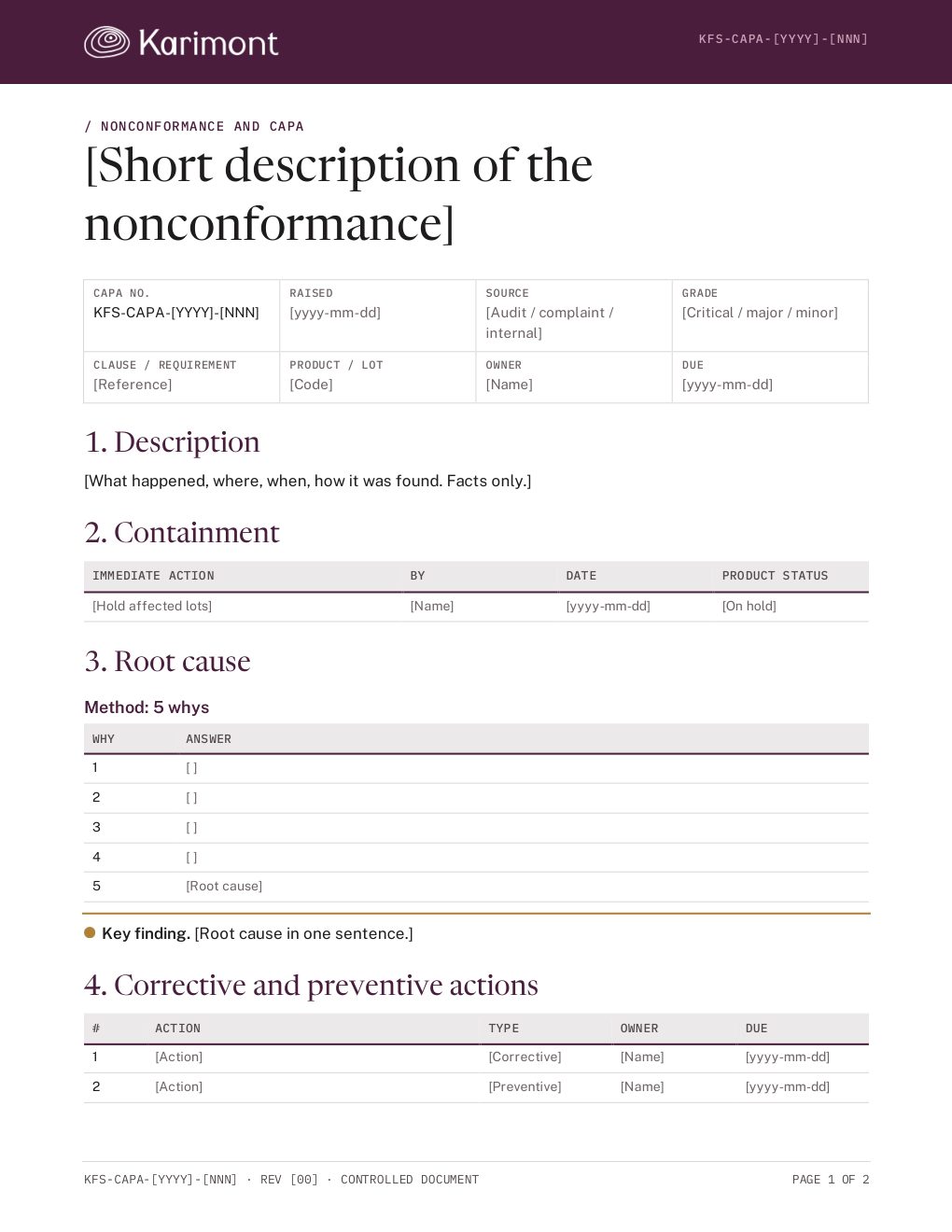
Nonconformance and CAPA report template, page 1. Example layout.
What you get back
Written work you can use, keep and show an auditor. Choose one to see its page.
Depending on the job: , , , , and .
audit gap registers
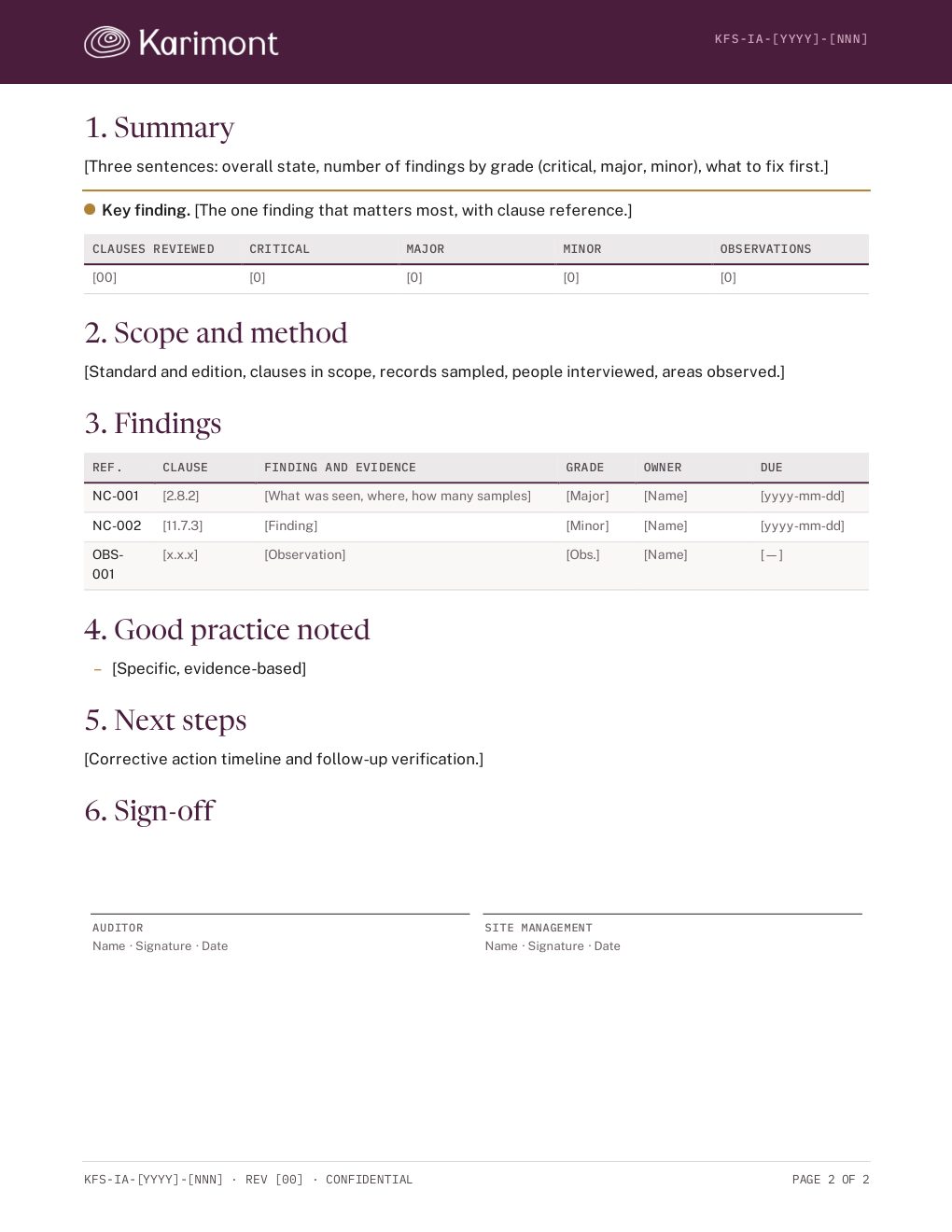
Each finding with its clause, the evidence seen, a grade, an owner and a due date. The one finding that matters most is marked first.
Internal audit report template, page 2. A Karimont template with placeholder fields, not client work.
Questions people ask first
Short answers here, with the detail on each solution page and in the full FAQ.
What is the difference between SQF and BRCGS?
Both are GFSI-recognized and cover similar ground. SQF is widely used in North America and requires a trained SQF practitioner on site; BRCGS is more prescriptive in places and grades sites from AA to D. Which suits you usually depends on what your customers ask for.
Typically 1 to 2 days, against the usual 3 to 5. My reviews are AI-powered, which also lowers the cost; exact timing depends on the package and the product information supplied.
HACCP is the method for finding hazards and controlling them at critical points. A PCP is the written plan the SFCR requires of many licence holders: it uses the same hazard analysis and adds requirements such as labelling, packaging and import controls.










 I'm Thomas Kunjumon, a food safety and regulatory consultant with a scientific research background and experience inside food manufacturing and regulatory environments.